China Switches On the World's First Commercial 800V DC Power System for an AI Data Center
Envision says its new setup links solid-state transformers, batteries and AI controls to feed servers directly with high-voltage direct current.
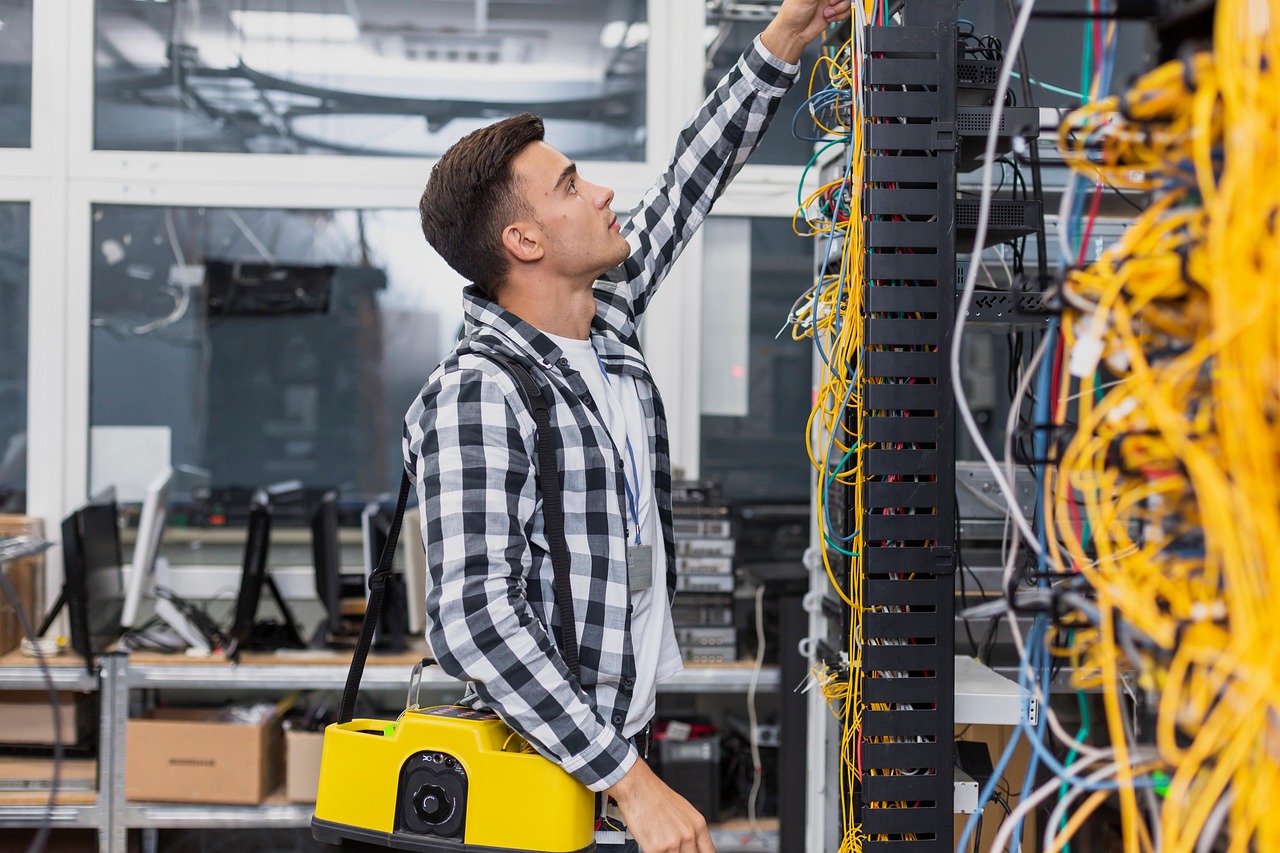
AI data centers are not just hungry for electricity. They are fussy about how it arrives. On 2 November, Shanghai-based green-tech company Envision said it has put into service what it calls the world's first commercial deployment of an integrated 800-volt direct-current power system in a large-scale AI data center. The site is in Ulanqab, China, and the system is already powering live computing workloads.
What has actually been built
In a conventional data center, power typically passes through several conversion stages between the grid and the chips. Envision's pitch is to shorten that journey. Its system takes medium-voltage 10 kV alternating current and, using solid-state transformers, converts it straight to an 800V DC bus. From there, equipment that adjusts direct-current voltage for computing hardware feeds the server racks.
Battery energy storage sits inside this chain rather than being bolted on as a separate backup. According to the company, the batteries do two jobs. They provide support on a scale of seconds, and they provide backup lasting minutes.
The problem it is trying to solve
AI chips do not draw power evenly. Graphics processors can swing from light to heavy load almost instantly, and those jolts can stress a facility's electrical systems and the grid behind it. Envision says its answer is millisecond-level coordination between the transformers and the batteries, so that the batteries absorb GPU load fluctuations locally instead of passing them upstream.
That coordination is handled by software. Envision's Dubhe Controller, which draws on what the company calls the Dubhe Energy Foundation Model, manages the transformers and batteries in real time. Its job is to match power supply to computing demand and to cope with sudden load swings.
Why 800V DC is getting attention
The appeal of higher-voltage DC is simple in principle. Fewer conversion steps mean fewer places where energy is lost as heat. Company representatives told media that the platform could reduce energy losses, bring down infrastructure costs, and let operators run more powerful AI servers within the same physical space. Those are the company's own claims. No independent performance figures were published in the material we reviewed, so the real-world savings remain to be shown.
The announcement also says the deployment comes ahead of wider industry adoption. That suggests Envision sees 800V DC as a direction the sector is heading, and it wants a head start in proving the concept at commercial scale.
A different kind of battery story
Most battery headlines focus on cars or grid-scale storage for solar and wind. This one shows another role for them: acting as a shock absorber inside the computing facility itself, smoothing out the abrupt demand spikes that AI workloads create. It also shows how closely energy hardware and AI software are becoming tied. Here, one AI model helps run the power system that feeds other AI models.
What to be cautious about
The claim of a world first comes from the company, and the details published so far describe the architecture and capabilities rather than measured efficiency or cost results. It is also one site. Whether the approach holds up across different operating conditions, scales to other facilities, and wins over equipment makers and data center operators elsewhere will be the real test.
Still, the move points to a quiet but important shift. As AI demand strains power supply, the winners may be those who rethink the electrical plumbing inside the data center, not only those who build more generation.
Why it matters
AI is pushing data centers to their electrical limits, and how power is delivered inside them is becoming as important as how much is generated. If a shorter, battery-backed DC chain proves efficient and reliable, it could ease strain on grids and cut costs for operators worldwide. China's early commercial deployment also signals where competition in AI infrastructure is heading.
Background
Data centers have traditionally converted power several times between the grid and the servers, losing some energy at each step. Solid-state transformers are an alternative to conventional transformers that can handle conversion electronically, and direct-current distribution at higher voltages is being explored as a way to simplify the chain. AI workloads add a further challenge because chip demand can change very quickly. Envision is a Shanghai-based green-technology company.
What to watch
Watch for independent data on efficiency, cost and reliability from the Ulanqab site, since current claims come from the company. Also watch whether other data center operators and equipment makers announce 800V DC projects, and whether Envision extends the system to more facilities. The performance of the AI-driven controller during sudden load swings will be a key proof point.
Sources & attribution
This AI-assisted summary is based on the reports below. Read them for the full original coverage.
- Envision Achieves World's First Commercial Deployment of Integrated 800V DC SST-Based Power System in Large-Scale AI Data Center newswire.ca
- China debuts world's first 800V DC power system for smart data centers interestingengineering.com
Drafted with AI assistance from the sources above. See our editorial standards. Spotted a mistake? Request a correction.
Get The Oval Brief
The essential global stories, delivered daily.
Keep reading

China-Linked Biotech Reports Promising Phase 2 Data for an Antibody Aimed at a Dangerous Immune Storm
Phase 2 results for plonmarlimab, a GM-CSF-blocking antibody, are now in a peer-reviewed journal. A Phase 3 trial is under way in China.
Xpeng Starts Building Solid-State Batteries for Its Humanoid Robot Before the Robot Even Ships
Xpeng has begun small-batch production of solid-state batteries made for its Iron humanoid robot. Robots may get this technology before electric cars do.
South Korean Team Cuts the Anode From EV Batteries to Pack in More Range
KAIST researchers in South Korea say an anode-free battery design could shrink EV packs and extend driving range. Their work targets uneven lithium growth on copper.